


Can the Right Shoes Relieve Rheumatoid Arthritis?
The right shoes for rheumatoid arthritis cannot treat the disease, but they can relieve a substantial share of the foot pain that comes with it. Well-fitted, wide, cushioned footwear reduces pressure on inflamed joints, prevents rubbing, and makes walking easier — a real difference in daily life, provided it sits alongside medical care.
Distinguishing treatment from relief matters when evaluating shoes for rheumatoid arthritis. Footwear does not slow joint damage or alter disease activity; it changes the mechanical load on the foot.
What Shoes Can Realistically Do
| Outcome | Evidence strength | What it means in practice |
|---|---|---|
| Less forefoot pressure | Good | Wider width and rounded toe box reduce load on the metatarsal heads |
| Less friction and rubbing | Good | Seam-free uppers and correct heel hold cut blister and corn formation |
| Better walking tolerance | Moderate | Cushioning reduces impact-related pain over distance |
| Improved balance confidence | Limited | Firmer soles and better grip help, especially outdoors |
| Reduced disease activity | Not supported | No footwear changes inflammatory markers or joint erosion |
The Mechanisms Behind the Relief
Three mechanical pathways explain most of the benefit.
Pressure redistribution. Swelling and joint erosion concentrate load on a smaller area of the sole. A wider, cushioned shoe spreads that load, so no single point exceeds the threshold that produces pain.
Friction removal. Shoes that slide or rub create shear forces at the skin. A secure heel and a correctly sized toe box eliminate the movement that drives blisters, calluses and, in rheumatoid arthritis, ulceration risk.
Reduced compensatory load. When the foot hurts, people alter their gait — shortening stride, avoiding heel strike, walking on the outside of the foot. Those compensations transfer load to the knee, hip and lower back. Comfortable shoes reduce the need to compensate.
What Shoes Cannot Fix
- Inflammation. Disease-modifying medication is the treatment route. Footwear does not substitute.
- Fixed deformity. Once toes are displaced or the forefoot is fixed in a deformed position, shoes accommodate rather than correct.
- Systemic fatigue. Fatigue in rheumatoid arthritis is not a footwear problem, though easier walking can conserve energy.
- Bone erosion. Structural damage progresses independently of what you wear.
Making Relief Last
Relief from a single good pair is temporary if the foot keeps changing. Practical steps: re-measure annually, rotate two pairs so midsoles recover between wears, replace shoes when the midsole compresses, and treat shoe choice as one part of a plan that includes medication, physiotherapy and, where relevant, podiatry.
If pain is localised to a specific spot — a single metatarsal head, the heel, or the first toe joint — a shoe alone may not solve it. A custom insole or a metatarsal pad addresses point loading that even a 6E width cannot.
Wide, Cushioned Options for Men
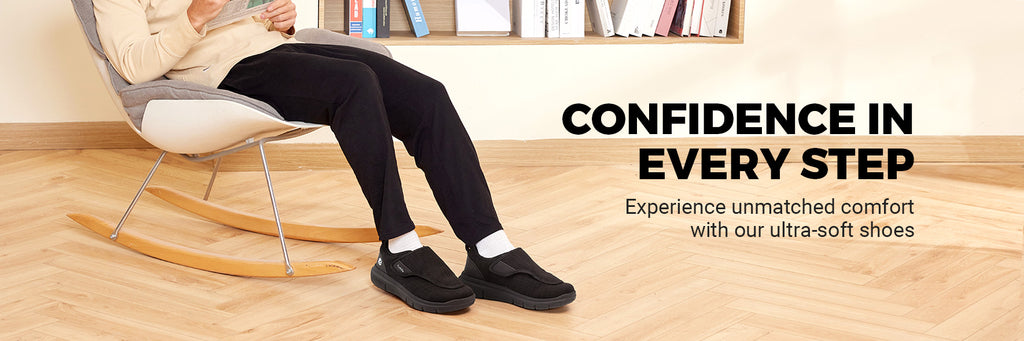
FitVille's men's wide shoes are built around the three features that produce most of the relief available from footwear: generous width, a cushioned and stable sole, and a soft upper with an adjustable closure.
FAQ
Will better shoes reduce my need for medication?
No. Footwear is not a disease-modifying intervention. Discuss any medication change with your rheumatologist.
Can shoes stop a flare?
No. A flare is driven by disease activity. Good shoes may make a flare more bearable, particularly if swelling makes your usual shoes painful.
How soon should I notice a difference?
Usually within days, if the previous shoe was the wrong width. If nothing changes after a week of correct fit, the pain source may not be shoe-related.
References
- Current extended-width options for men. Men's Wide Shoes
- Condition-grouped footwear. Men's Shoes for Arthritis
Related Questions
Further fit answers, all on this site:


