


What Shoes Are Best for Diabetic Feet?
The best shoes for diabetic feet combine five things: a seam-free, soft upper, extra depth, a wide rounded toe box, a cushioned non-slip sole, and no internal pressure points. The reason is specific to diabetes — skin that cannot feel damage needs a shoe that cannot cause it.
Diabetic neuropathy dulls or removes pain sensation in the feet. A seam that would prompt anyone else to adjust their shoe can, on an insensitive foot, rub for hours into a blister, and that blister is how many diabetic foot ulcers begin. Shoe choice is therefore prevention, not comfort preference.
The Non-Negotiable Features
| Feature | Minimum standard | Why diabetes makes it critical |
|---|---|---|
| Seam-free upper | No stitching inside the toe box | A rubbing seam becomes an ulcer before it is felt |
| Extra depth | Room for toes plus a flat, removable insole | Stops the toe box pressing clawed or hammer toes |
| Wide toe box | Toes never touch the sides | Sideways pressure on numb skin goes unnoticed |
| Cushioned sole | 20 mm+ midsole, firm heel counter | Reduces peak pressure under the metatarsal heads |
| Non-slip outsole | Defined rubber tread | A fall is more serious when healing is slow |
| Adjustable closure | Laces or straps, no slip-on | Prevents the foot sliding and shearing inside the shoe |
What to Avoid
- Pointed toes. They press the first and fifth toe joints — the two most common ulcer sites.
- Exposed heels and open backs. Slippers and sandals allow shearing and offer no protection.
- Rigid leather uppers with internal seams. Structure without lining is a pressure map of your toes.
- Thin, flat soles. Every stone underfoot is a bruise that will not be noticed.
- Shoes that need "breaking in". For diabetic feet, break-in means injury. The fit must be right on day one.
Checking the Shoe — and the Foot
The shoe check is the same as for any wide-fitting shoe: thumb's width at the toes, secure heel, no side pressure while standing. What diabetes adds is the foot check. After every wear, look at the skin: red marks, blisters, warm spots or discolouration mean the shoe is damaging tissue you cannot feel.
Use a mirror or ask someone to check the sole and heel. Any mark that persists beyond 20 minutes is a pressure injury, and a reason to change the shoe — or to have the foot assessed — before the next wear.
Socks and Insoles Complete the Picture
Seam-free, non-binding socks prevent the top-line pressure that leaves rings around the ankle. A flat, contoured insole spreads load under the forefoot; avoid rigid or high-arch inserts unless a podiatrist has prescribed them, because on an insensitive foot they create their own pressure points.
Diabetic Shoes for Men
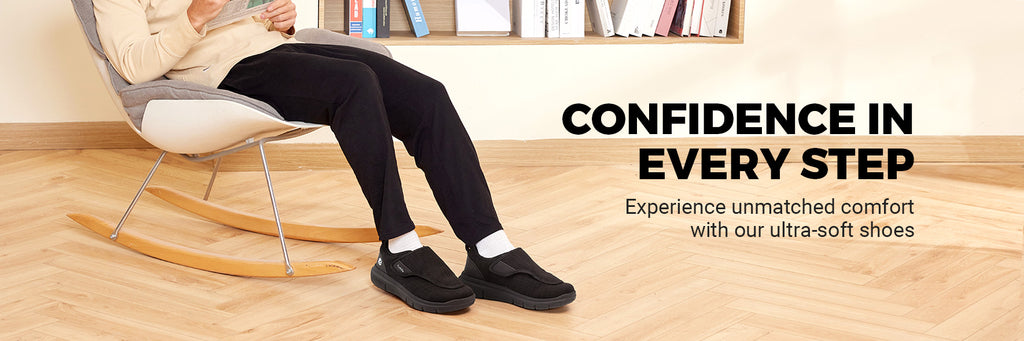
FitVille's men's shoes for diabetes are built to this specification: seam-free lined uppers, extra depth, wide toe boxes and cushioned non-slip soles, in widths to 4E and 6E. Check the diabetic feet guidance for how width interacts with swollen feet.
FAQ
Are diabetic shoes really different from comfortable shoes?
The overlap is large, but diabetic shoes are specified differently: seam-free interiors, extra depth, and pressure-mapped soles are requirements, not options. Many comfortable shoes meet them; many do not.
Can I wear my normal shoes if my feet feel fine?
Feeling fine is exactly the problem — neuropathy removes the warning signal. If you have any loss of sensation, shoe choice should assume you cannot feel damage.
How often should diabetic shoes be replaced?
Every 6 to 12 months, or sooner if the insole compresses or the outsole wears unevenly. Worn pressure-mapping features do not announce themselves.
References
- Men's diabetic footwear. Men's Shoes for Diabetes
- Extended-width footwear. Men's Wide Shoes
Related Questions
Further fit answers on this site:


