


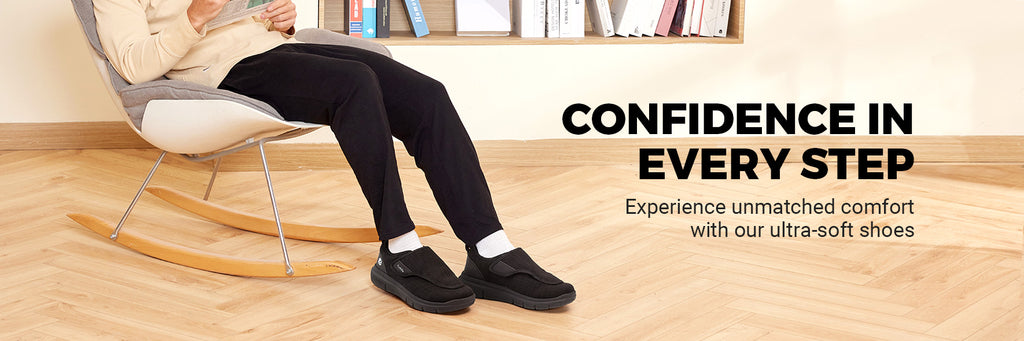
FAQs: Can the Right Shoes Relieve Hallux Rigidus?
Hallux rigidus can make everyday activities such as walking, standing, or exercising feel less comfortable. Because the big toe joint plays an important role when the foot pushes off the ground, footwear can make a noticeable difference to how your feet feel throughout the day.
While shoes cannot reverse the underlying joint changes associated with hallux rigidus, choosing the right shoes for Hallux Rigidus may help reduce pressure on the forefoot and make walking more comfortable.
What Is Hallux Rigidus?
Hallux rigidus is a condition that affects the joint at the base of the big toe. It can cause stiffness and discomfort, particularly when the toe needs to bend during walking.
Some people may also notice reduced flexibility in the big toe, swelling around the joint, or difficulty finding shoes that feel comfortable.
Because symptoms can vary, footwear needs can vary too. A shoe that feels comfortable for one person may not provide enough room or support for another.
Can the Right Shoes Relieve Hallux Rigidus?
The right shoes may help manage discomfort associated with hallux rigidus, but they do not cure the condition or restore lost joint movement.
Shoes can influence how much pressure is placed on the front of the foot and how the foot moves during each step. A comfortable pair with enough space around the toes, a supportive sole, and a suitable level of flexibility may make daily walking easier.
The goal is generally to create a more comfortable environment for the foot rather than to correct the underlying joint condition.
What Should You Look for in Shoes for Hallux Rigidus?
Several footwear features may be worth considering:
A Wide Toe Box
A roomy toe box gives the toes more space and can help avoid unnecessary pressure around the big toe joint.
Look for shoes that allow your toes to spread naturally without being squeezed together. Extra-wide options can be particularly useful for people who need additional forefoot room.
A Comfortable, Supportive Sole
A supportive sole can help provide a stable base for walking. Some people with a stiff big toe may also prefer footwear with a sole that reduces the amount of bending required through the forefoot.
The ideal sole depends on your individual comfort and walking pattern.
A Secure Fit
Shoes should stay securely on your feet without creating excessive pressure. Adjustable straps or lacing can make it easier to achieve a comfortable fit throughout the day.
A secure fit can also help prevent your foot from sliding forward inside the shoe.
A Comfortable Upper
Choose materials and shoe designs that do not press directly against areas that feel sensitive. A flexible or accommodating upper can provide additional comfort around the forefoot.
Enough Length
Your toes should have sufficient room at the front of the shoe. Avoid shoes that force the big toe against the end, particularly when walking downhill or spending long periods on your feet.
Are Wide Shoes Good for Hallux Rigidus?
Wide shoes can be helpful when a standard shoe feels restrictive around the forefoot.
A wider design can provide additional room for the big toe and other toes, reducing the feeling of being squeezed inside the shoe. However, simply choosing the widest shoe available is not always the answer.
The shoe should still provide a secure fit through the heel and midfoot. The right combination of width, length, support, and overall shape is more important than width alone.
Is a Wide Toe Box Important for Hallux Rigidus?
Yes, a wide toe box can be an important feature to consider.
A toe box that follows the natural shape of the forefoot gives the big toe more room and can help avoid unnecessary compression. This may be especially useful if your feet are naturally wide or if your big toe joint feels sensitive.
When trying on shoes, check that the widest part of your foot sits comfortably within the widest part of the shoe.
Should Shoes for Hallux Rigidus Be Flexible or Stiff?
There is no single answer that works for everyone.
Some people may find that a very flexible shoe allows too much movement through a stiff big toe joint, while others may prefer a more flexible design for everyday comfort.
A shoe with a supportive sole and an appropriate amount of flexibility may feel more comfortable than an extremely soft or highly flexible shoe.
If bending your big toe is particularly uncomfortable, footwear that limits excessive forefoot bending may be worth discussing with a podiatrist or other qualified healthcare professional.
Can Cushioned Shoes Help Hallux Rigidus?
Cushioning can improve overall underfoot comfort, especially when you spend a lot of time walking or standing.
However, cushioning alone does not address every footwear consideration associated with hallux rigidus. A well-cushioned shoe can still feel uncomfortable if the toe box is too narrow or the sole requires uncomfortable toe movement.
Consider cushioning together with fit, toe-box space, sole design, and stability.
Are Orthopedic Shoes Good for Hallux Rigidus?
Shoes marketed as orthopedic or supportive footwear may offer features that some people find useful, such as wider fits, supportive soles, cushioning, and adjustable closures.
However, the label itself does not guarantee that a particular shoe will be comfortable for you. Focus on the actual construction and fit of the shoe rather than the name used to describe it.
If you have persistent or significant symptoms, a healthcare professional can help determine whether additional footwear modifications or orthotic support may be appropriate.
What Shoes Should You Avoid With Hallux Rigidus?
Footwear that creates pressure around the big toe or forces the toes into a restricted position may be uncomfortable.
You may want to be cautious with:
-
Narrow or pointed toe boxes
-
Shoes that press directly against the big toe joint
-
Very tight-fitting footwear
-
Shoes that cause your toes to hit the front
-
Footwear that feels unstable or difficult to walk in
-
Styles that make your big toe bend uncomfortably with every step
High heels can also increase pressure toward the front of the foot, so they may not be comfortable for people experiencing big toe joint stiffness.
Can Walking Shoes Be Better Than Casual Shoes for Hallux Rigidus?
Walking shoes can be a practical choice because they are generally designed for repeated movement and may offer cushioning, support, and a more structured sole.
However, the most suitable shoe is the one that fits your foot properly and feels comfortable during your normal activities. A casual shoe with sufficient toe room and appropriate support may work just as well for some situations.
How Should Shoes Fit If You Have Hallux Rigidus?
When trying on shoes, pay attention to several areas:
-
Make sure the toes are not compressed from the sides.
-
Check that the big toe does not press against the front of the shoe.
-
Make sure the widest part of your foot fits comfortably.
-
Check that your heel does not slip excessively.
-
Walk around and pay attention to how the big toe joint feels.
-
Try shoes later in the day if your feet tend to become larger after prolonged standing or walking.
Your feet should feel comfortable rather than squeezed into the shoe.
Can the Right Shoes Stop Hallux Rigidus From Getting Worse?
Shoes cannot guarantee that hallux rigidus will stop progressing.
However, choosing footwear that fits properly and feels comfortable can help you manage everyday walking and avoid unnecessary pressure from poorly fitting shoes.
If your symptoms are changing, becoming more severe, or interfering with normal activities, consider seeking professional advice rather than relying on footwear alone.
Can Insoles Help With Hallux Rigidus?
Insoles may change how pressure is distributed across the foot and may improve comfort for some people.
The right insole depends on your foot shape, symptoms, footwear, and walking pattern. An insole that works well for one person may not work well for another.
If you are considering custom orthotics or experiencing persistent discomfort, a podiatrist or other qualified healthcare professional can help assess your individual needs.
What Are the Best Shoes for Hallux Rigidus?
There is no single best shoe for everyone with hallux rigidus. Look for footwear that provides:
-
A roomy or wide toe box
-
Adequate overall width
-
Comfortable cushioning
-
A supportive and stable sole
-
A secure heel and midfoot fit
-
Enough length for natural toe movement
-
An upper that does not create pressure around the big toe joint
-
A design that feels comfortable during your typical activities
For many people, a properly fitted wide or extra-wide walking shoe can be a practical starting point.
Final Thoughts
The right shoes cannot cure hallux rigidus, but they can play an important role in everyday comfort. A roomy toe box, appropriate width, supportive sole, comfortable cushioning, and secure fit can help reduce the discomfort caused by restrictive footwear.
Instead of focusing only on shoe labels, pay attention to how the shoe fits your individual foot. If hallux rigidus is causing persistent pain, stiffness, or difficulty walking, professional advice can help you understand which footwear and other options may be suitable for you.
This article is for general educational purposes and is not a substitute for professional medical advice. If you have ongoing or worsening foot symptoms, consult a qualified healthcare professional.


