


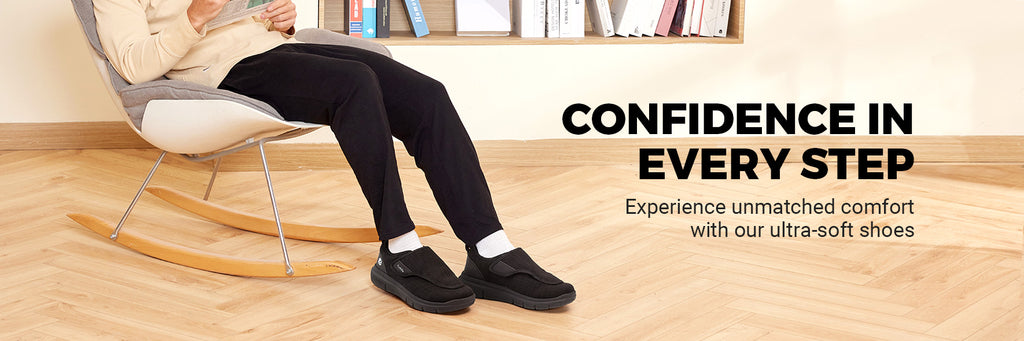
FAQs: Can the Right Shoes Relieve Swollen Feet?
Swollen feet can make walking, standing, and everyday activities uncomfortable. When your feet become swollen, shoes that normally fit well may suddenly feel tight and restrictive.
This often raises an important question: Can the right wide shoes relieve swollen feet?
The answer is that the right shoes cannot treat the underlying cause of foot swelling, but they can help reduce pressure, improve comfort, and make walking easier. Choosing footwear with enough room, good support, and an adjustable fit can make a significant difference.
Can Shoes Actually Reduce Foot Swelling?
Shoes cannot directly remove the underlying cause of swelling. However, properly fitting footwear can prevent unnecessary pressure on swollen areas and make your feet feel more comfortable.
When shoes are too tight, they can compress the toes, forefoot, and sides of the feet. This can make already swollen feet feel even more uncomfortable.
A properly fitted shoe provides enough space for your feet to expand naturally while keeping them secure.
How Do the Right Shoes Help Swollen Feet?
The right shoes can help in several ways:
-
Reduce pressure on swollen areas
-
Provide more room for increased foot volume
-
Minimize rubbing and friction
-
Improve walking comfort
-
Provide stability and support
-
Accommodate changes in foot size throughout the day
The goal is to create a comfortable environment for your feet rather than trying to squeeze them into a standard shoe that no longer fits properly.
Are Wide Shoes Better for Swollen Feet?
Wide shoes can be helpful when swelling causes your feet to become wider.
A wider shoe gives the forefoot more room and can reduce pressure along the sides of the feet. If standard wide shoes are still too restrictive, an extra-wide design may be more suitable.
However, the shoe should not be excessively wide. Too much space can allow your feet to slide around, increasing friction and reducing stability.
The best fit is wide enough to accommodate swelling but secure enough to keep your feet stable.
Is a Wide Toe Box Important?
Yes. A roomy toe box is one of the most important features to consider.
Swollen feet may need additional space around the toes and forefoot. A narrow toe box can squeeze the toes together and create uncomfortable pressure.
Look for shoes with a wide, rounded, and sufficiently deep toe box. Your toes should be able to move naturally without touching the front or sides of the shoe.
Can Adjustable Shoes Help?
Absolutely. Adjustable footwear can be particularly useful when swelling changes throughout the day.
Shoes with hook-and-loop straps, adjustable laces, elastic panels, or wide-opening designs allow you to modify the fit as your feet change in size.
For example, you may need to loosen your shoes in the afternoon when your feet become more swollen. Adjustable shoes make this easier without requiring you to buy a different pair of shoes.
Should I Wear Shoes With Cushioned Soles?
A cushioned sole can improve comfort when swollen feet feel tired or sensitive.
Good cushioning can help absorb some of the impact created when your feet contact the ground. This can be particularly useful if you spend a lot of time standing or walking.
However, extremely soft soles are not always ideal. A shoe should provide a balance between cushioning and stability so that your feet feel supported while walking.
Are Flexible Shoes Better for Swollen Feet?
Flexible footwear can help accommodate changes in foot volume and allow the shoe to move naturally with your feet.
A flexible upper can be especially comfortable when swelling affects the top or sides of the foot. Materials with some stretch may adapt more easily than rigid materials.
However, flexibility should not mean a lack of support. Look for shoes that combine a flexible upper with a stable sole and secure heel.
Should I Buy a Larger Shoe Size?
Simply buying a longer shoe is not necessarily the best solution.
If swelling makes your feet wider rather than longer, increasing the shoe length can leave excessive space in front of your toes while failing to provide enough room around the sides.
Instead, choose the correct length and select a wider or extra-wide fit when necessary.
When Should I Try on Shoes for Swollen Feet?
Late afternoon or evening is often a good time to try on shoes because your feet may be more swollen after a day of activity.
A shoe that fits comfortably when your feet are at their largest is less likely to become painfully tight later in the day.
If you normally wear socks or other foot coverings, wear them when trying on shoes so you can assess the fit accurately.
What Features Should I Look for?
When choosing shoes for swollen feet, consider:
Wide or Extra-Wide Fit
Provides additional room around the forefoot and sides of the foot.
Roomy Toe Box
Allows the toes to spread and move without being compressed.
Adjustable Closures
Make it easier to adapt the fit as swelling changes.
Soft, Flexible Upper
Can accommodate changes in foot volume and reduce pressure points.
Cushioned Midsole
Provides comfort and helps absorb impact during walking.
Stable Outsole
Helps provide balance and reliable traction.
Removable Insoles
Can create additional internal space or accommodate alternative insoles when needed.
Can the Right Shoes Prevent Swollen Feet From Getting Worse?
Proper footwear can reduce unnecessary pressure and discomfort, but it cannot necessarily prevent swelling from increasing.
If your feet naturally swell after prolonged standing, walking, or sitting, comfortable footwear may make the experience easier. However, persistent swelling can have many possible causes that are unrelated to footwear.
If swelling is frequent, severe, sudden, painful, or unexplained, speak with a healthcare professional to determine the underlying cause.
How Do I Know If My Shoes Are Helping?
Your shoes should feel comfortable when you stand and walk.
Signs that your shoes are fitting well include:
-
No painful pressure points
-
Toes can move freely
-
No excessive heel slipping
-
No uncomfortable rubbing
-
Enough room around swollen areas
-
Stable and comfortable walking
-
No significant increase in discomfort throughout the day
If your shoes leave deep marks, cause numbness or tingling, or become increasingly uncomfortable as your feet swell, you may need a different width or a more adjustable design.
Final Thoughts
So, can the right shoes relieve swollen feet? While shoes cannot treat the underlying cause of swelling, the right footwear can significantly improve comfort by reducing pressure and providing enough room for swollen feet.
Choose shoes with a wide or extra-wide fit, roomy toe box, adjustable closures, flexible materials, comfortable cushioning, and a stable sole. Most importantly, make sure the shoes fit securely without squeezing your feet.
If your feet are persistently or unusually swollen, don't rely on footwear alone. Identifying and addressing the underlying cause is important for long-term foot health.


