


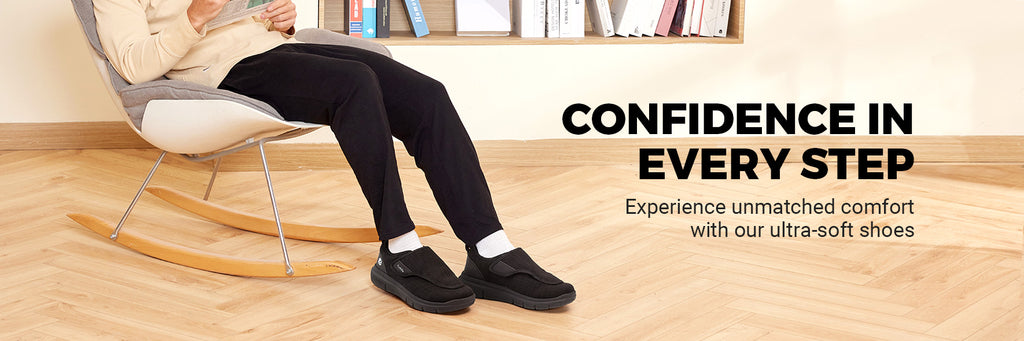
FAQs: Do Wide Fit Shoes Help with Bunions
If you have bunions, simply changing your footwear can make a significant difference in your daily comfort. One of the most common recommendations from foot specialists is to wear wide fit shoes, but many people wonder whether they actually help or if they're just more comfortable.
This FAQ guide explains how wide fit shoes affect bunions, what benefits they offer, and what features to look for when choosing the right pair.
What is a bunion?
A bunion is a bony bump that develops at the joint where the big toe meets the foot. It forms when the big toe gradually shifts toward the smaller toes, causing the joint to protrude outward.
Common symptoms include:
- Pain or tenderness around the joint
- Swelling and redness
- Difficulty finding comfortable shoes
- Calluses where the toes rub together
- Limited movement of the big toe
While genetics often play a major role, wearing narrow or tight shoes can aggravate the condition and increase discomfort.
Do wide fit shoes help with bunions?
Yes. Wide fit shoes can help relieve many of the symptoms associated with bunions.
Although they won't correct the underlying bone deformity, they reduce pressure on the affected joint, making everyday activities like walking and standing much more comfortable.
Many podiatrists recommend wide fit shoes as part of a conservative treatment plan for mild to moderate bunions.
How do wide fit shoes help?
Wide fit shoes provide extra room across the forefoot, reducing compression around the bunion.
Benefits include:
- Less pressure on the bunion joint
- Reduced rubbing against the inside of the shoe
- Lower risk of blisters and skin irritation
- Improved comfort during long periods of walking or standing
- Better overall foot stability
Giving your feet more room allows the toes to rest in a more natural position.
Can wide fit shoes cure bunions?
No.
Wide fit shoes do not reverse a bunion or straighten the big toe. Once the joint has changed position, shoes alone cannot correct it.
However, wearing properly fitting shoes can:
- Reduce daily pain
- Minimize inflammation
- Prevent excessive pressure
- Slow symptom progression in many people
For severe bunions, additional treatments may be necessary.
Are wide fit shoes better than regular shoes?
For people with bunions, the answer is usually yes.
Standard-width shoes often squeeze the forefoot, placing continuous pressure on the bunion. Wide fit shoes reduce this compression and provide a more comfortable fit.
Even if your heel is average width, choosing a shoe with extra forefoot space can often improve comfort.
Are wide fit shoes the same as wide toe box shoes?
Not exactly.
Although the terms are often used interchangeably, they describe different features.
Wide fit shoes provide additional width throughout the shoe, while wide toe box shoes specifically create extra room around the toes.
For bunions, a shoe with both a wide fit and a spacious toe box is often the ideal combination.
What features should bunion-friendly wide fit shoes have?
Besides extra width, look for shoes that include:
- A roomy toe box
- Soft, flexible upper materials
- Cushioned midsoles
- Good arch support
- Adjustable laces or hook-and-loop straps
- Low heels or flat, stable soles
- Smooth interior lining to reduce friction
These features help improve comfort while reducing pressure on sensitive areas.
What shoes should people with bunions avoid?
If you have bunions, try to avoid:
- Pointed-toe shoes
- Narrow dress shoes
- High heels
- Tight fashion sneakers
- Shoes made from stiff, non-stretch materials
These styles increase pressure on the bunion and can make symptoms worse.
Are extra wide shoes even better?
Sometimes.
People with severe bunions, swollen feet, or naturally broad feet may benefit from extra wide (2E, 4E, or wider) shoes.
The right width depends on your individual foot shape. Shoes should feel comfortably roomy without allowing excessive foot movement inside the shoe.
Can wearing the wrong shoes make bunions worse?
Yes.
Although shoes don't usually cause bunions by themselves, consistently wearing footwear that compresses the toes can:
- Increase pain
- Cause inflammation
- Lead to corns and calluses
- Accelerate symptom progression
- Make walking less comfortable
Choosing properly fitting shoes is one of the simplest ways to reduce unnecessary stress on the joint.
Should I wear wide fit shoes all the time?
If you have bunions, wearing supportive wide fit shoes for most daily activities is generally recommended.
Whether you're walking, commuting, shopping, or working, reducing pressure on the bunion throughout the day can help improve long-term comfort.
You don't necessarily need every shoe to be extra wide, but avoiding tight footwear whenever possible is a good habit.
Are orthopedic shoes better than regular wide fit shoes?
Orthopedic shoes may provide additional benefits, particularly for people with moderate to severe bunions.
Many orthopedic shoes combine:
- Wide fit construction
- Spacious toe boxes
- Enhanced arch support
- Shock-absorbing cushioning
- Adjustable closures
These features can provide greater comfort than width alone.
Final verdict: Do wide fit shoes help with bunions?
Yes. Wide fit shoes are one of the simplest and most effective ways to manage bunion discomfort.
While they cannot reverse the deformity, they can:
- Reduce pressure on the bunion
- Improve walking comfort
- Minimize rubbing and irritation
- Help prevent symptoms from becoming worse
- Support healthier foot alignment during daily activities
For many people with bunions, switching to properly fitted wide shoes is an easy first step toward greater comfort and improved foot health.


