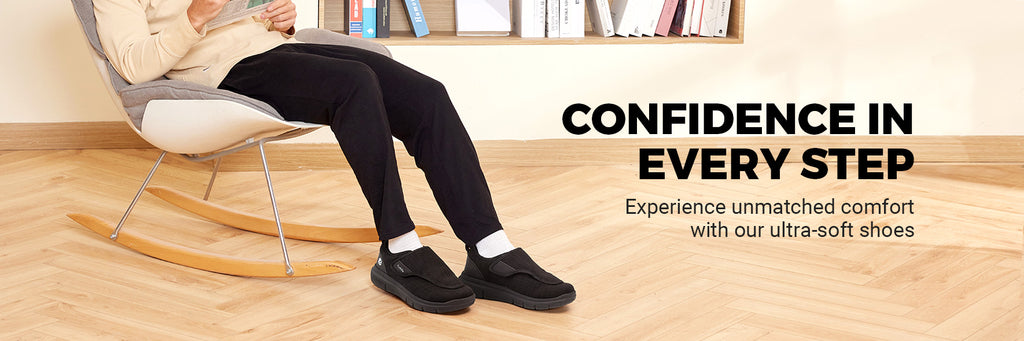
If you have bunions, finding the right shoes can make a significant difference in your daily comfort. Shoes that are too tight or poorly designed can increase pressure on the bunion, leading to pain, swelling, and irritation. On the other hand, well-fitting footwear like shoes for bunions can help reduce discomfort and support healthy foot movement.
In this FAQ, we'll answer the most common questions about how shoes should fit if you have bunions and what features to look for when shopping.
Frequently Asked Questions About Shoes for Bunions
1. How should shoes fit if I have bunions?
Shoes should fit comfortably from the moment you put them on. They should:
- Provide enough room for your toes to spread naturally
- Avoid squeezing or rubbing against the bunion
- Keep your heel secure without slipping
- Offer good arch support and cushioning
- Flex naturally with your foot while remaining stable
A properly fitting shoe should never require a "break-in" period that causes pain.
2. Should I buy shoes a size bigger for bunions?
Not necessarily.
Many people size up hoping to create more room, but longer shoes can cause your feet to slide forward, creating additional pressure on the bunion.
Instead, look for shoes with:
- Wide or extra-wide widths
- A spacious toe box
- Stretchable upper materials
The width of the shoe is usually more important than the length.
3. What is a wide toe box, and why does it matter?
A wide toe box gives your toes enough space to spread naturally instead of being squeezed together.
Benefits include:
- Less pressure on the bunion joint
- Reduced rubbing and irritation
- Better balance
- Improved overall comfort
People with bunions often notice immediate relief after switching to shoes with a roomy forefoot.
4. Should there be space in front of my toes?
Yes.
Leave approximately:
-
½ inch (about a thumb's width) between your longest toe and the front of the shoe.
This allows your feet to expand during walking and prevents constant pressure on your toes.
5. Is it okay if the shoe touches my bunion?
Ideally, no.
The upper should rest gently over the bunion without pressing tightly against it.
Look for uppers made from:
- Knit mesh
- Soft leather
- Stretch fabric
- Flexible engineered textiles
Rigid materials can worsen irritation and inflammation.
6. Should my heel fit tightly?
Yes—but not uncomfortably.
Your heel should:
- Stay securely in place
- Lift only slightly when walking
- Avoid excessive movement
A secure heel helps reduce sliding that can force your forefoot against the front of the shoe.
7. Can tight shoes make bunions worse?
Yes.
While tight shoes don't directly cause bunions, they can:
- Increase pain
- Speed up progression in susceptible individuals
- Cause inflammation
- Lead to blisters and calluses
- Increase pressure on the big toe joint
Avoid shoes with narrow, pointed fronts whenever possible.
8. Are slip-on shoes good for bunions?
They can be.
Good slip-on shoes should have:
- A roomy toe box
- Stretchable uppers
- Cushioned soles
- Good arch support
- Secure heel construction
Avoid slip-ons that are narrow or loose enough to cause your foot to slide.
9. Should I wear shoes with arch support?
Yes.
Proper arch support helps distribute pressure more evenly across the foot.
Benefits include:
- Less stress on the bunion joint
- Better alignment
- Improved walking comfort
- Reduced fatigue
People with flat feet may benefit from structured support, while those with high arches may need additional cushioning.
10. Are soft shoes always better?
Not always.
Soft uppers are excellent for reducing pressure on bunions, but the entire shoe should still provide:
- Stability
- Cushioning
- Arch support
- Durable outsoles
A shoe that's overly soft may lack the support needed for prolonged walking.
11. Should my toes touch the sides of the shoe?
No.
Your toes should be able to:
- Wiggle freely
- Spread naturally
- Move without rubbing the sides
Any constant pressure can increase discomfort over time.
12. Can I stretch shoes to fit my bunions?
Sometimes.
Leather shoes may stretch slightly, but shoes that are significantly too narrow usually won't become comfortable enough.
It's generally better to purchase shoes that fit correctly from the start.
13. Should I shop for shoes at a certain time of day?
Yes.
Feet naturally swell throughout the day.
Shopping in the:
helps ensure your shoes remain comfortable even when your feet are at their largest.
14. How can I tell if my shoes are too narrow?
Common signs include:
- Pain around the bunion
- Redness
- Blisters
- Tingling or numbness
- Toes overlapping
- Difficulty wiggling your toes
If you notice these symptoms regularly, your shoes may be too narrow.
15. Are wide-width shoes enough?
Not always.
Some wide shoes simply make the entire shoe larger without increasing toe room.
Look for shoes that specifically feature:
- Wide toe boxes
- Anatomical foot-shaped designs
- Multiple width options
- Stretchable uppers
These features are often more beneficial than width alone.
16. What shoe features are best for bunions?
The ideal shoes typically include:
- Wide or extra-wide fit
- Spacious toe box
- Soft, flexible upper materials
- Cushioned midsole
- Arch support
- Low heel (under 1 inch)
- Slip-resistant outsole
- Adjustable laces or hook-and-loop straps
- Lightweight construction
Together, these features help reduce pressure on the bunion while supporting comfortable movement.
17. Should I wear high heels if I have bunions?
It's best to limit high heels, especially those over 2 inches.
High heels shift body weight onto the front of the foot, increasing pressure on the bunion and forcing the toes into a narrow position. If you choose to wear heels for special occasions, opt for lower heels with a wider toe box and avoid wearing them for extended periods.
18. Can the right shoes cure bunions?
No.
Shoes cannot reverse or cure a bunion because the condition involves changes to the alignment of the big toe joint. However, properly fitting shoes can:
- Reduce pain and irritation
- Minimize pressure on the bunion
- Improve walking comfort
- Help slow symptom progression
- Lower the risk of blisters and calluses
If your bunion causes persistent pain or significantly affects your daily activities, consult a podiatrist for personalized treatment options.
Final Thoughts
Choosing the right shoes is one of the most effective ways to manage bunion discomfort. Rather than simply buying a larger size, prioritize a shoe that fits the shape of your foot. A wide toe box, adequate width, soft upper materials, supportive cushioning, and a secure heel can all work together to reduce pressure and improve comfort.
Remember that every foot is unique. Take the time to try on shoes later in the day, walk around before purchasing, and avoid styles that pinch or rub your bunion. With the right fit, you can stay comfortable and active while protecting your feet for the long term.