


FAQs: Should I Wear Wide Shoes for Swollen Feet?
Swollen feet can make ordinary shoes feel tight, uncomfortable, and difficult to wear. If your feet regularly swell during the day, you may wonder whether switching to wide shoes can help. In many cases, wide shoes can provide more room and improve comfort, especially when swelling causes your feet to become wider or fuller.
However, choosing the right pair involves more than simply buying a larger size. The width, toe box, materials, adjustability, and overall fit all matter.
Are Wide Shoes Good for Swollen Feet?
Yes, wide shoes can be a good choice for swollen feet. Swelling can increase the width and volume of your feet, making standard-width shoes feel restrictive. A wider shoe gives your feet more space and can reduce pressure on areas that feel particularly tight.
Look for shoes with a wide or extra-wide fit, a roomy toe box, and adjustable closures. These features allow the shoe to accommodate changes in foot size throughout the day.
It is important to remember that wide shoes should not feel excessively loose. A shoe that is too large can allow your foot to slide around, potentially causing rubbing, blisters, and instability.
Why Do Feet Swell During the Day?
Foot swelling can happen for many reasons. Standing or walking for long periods, warm weather, prolonged sitting, certain medications, and other factors can contribute to temporary swelling.
Some people notice that their feet are noticeably larger later in the day than in the morning. This is one reason it can be useful to try on shoes when your feet are at their largest.
If swelling is sudden, severe, affects only one foot, or occurs with pain, redness, warmth, shortness of breath, or other concerning symptoms, seek medical advice rather than simply changing footwear.
What Features Should I Look for in Shoes for Swollen Feet?
When shopping for shoes for swollen feet, consider these features:
1. Wide or Extra-Wide Fit
A wider shoe provides additional room across the forefoot and sides of the foot. If regular wide shoes still feel restrictive, an extra-wide option may be more appropriate.
2. Spacious Toe Box
Your toes should have enough room to spread naturally without being squeezed together. A wide, rounded toe box can be especially helpful when swelling affects the front of the foot.
3. Adjustable Closures
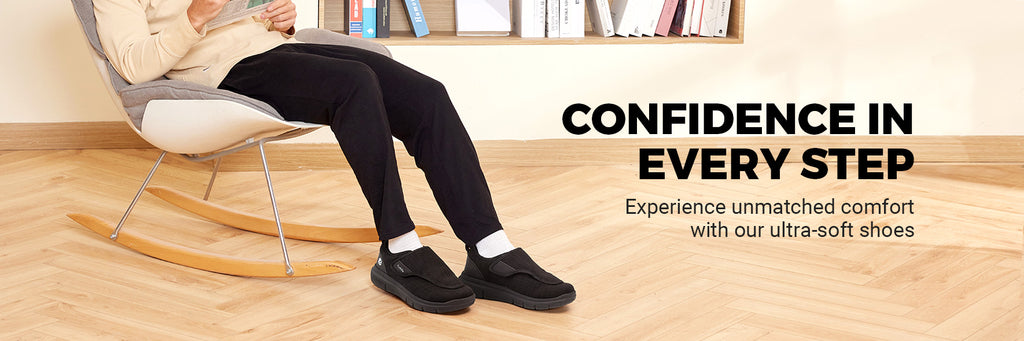
Shoes with adjustable straps, hook-and-loop fasteners, or elastic sections can be easier to fit as swelling changes. You can loosen the shoe when your feet become more swollen and secure it again when the swelling decreases.
4. Soft, Flexible Materials
Flexible uppers can accommodate changes in foot volume better than stiff materials. Look for shoes that bend and move naturally with your feet while still providing adequate support.
5. Cushioned Footbed
A supportive, cushioned footbed can make walking more comfortable when swollen feet feel tender or fatigued. However, cushioning should not make the shoe so shallow that it compresses the top of your foot.
Should I Buy a Bigger Shoe Size Instead of a Wide Shoe?
Usually, going wider is better than simply going longer.
Buying a longer shoe may give your feet extra space, but it can leave too much room in front of your toes. Your heel may then slip while walking, increasing friction and reducing stability.
If the length of your shoe is correct but the sides feel tight, look for a wider width rather than automatically choosing a longer size.
Should I Wear Wide Shoes All Day?
If wide shoes fit correctly and feel comfortable, they can generally be worn throughout the day. In fact, people whose feet swell as the day progresses may particularly benefit from shoes that provide enough room for natural changes in foot volume.
Check how your feet feel after several hours. If you notice pressure marks, numbness, tingling, rubbing, or increasing discomfort, the shoes may not provide enough room or may need adjustment.
Are Extra-Wide Shoes Better for Severely Swollen Feet?
Extra-wide shoes may be more suitable when standard wide shoes still put pressure on your feet. The right width depends on how much your feet swell and your individual foot shape.
For significant swelling, look for shoes that combine extra width with adjustable volume. A shoe that can be opened widely makes it easier to put on and adjust without forcing your foot into a narrow opening.
When Should I Measure My Feet?
It is often helpful to measure your feet later in the day, when swelling may be more noticeable. Measure both feet because they may not be exactly the same size.
When selecting shoes, use the measurements of your larger foot. You should have enough space for your toes to move comfortably, while your heel should remain reasonably secure.
Can Wide Shoes Prevent Swollen Feet?
Wide shoes cannot necessarily prevent the underlying cause of foot swelling. Their main benefit is reducing pressure and improving comfort when your feet become swollen.
If your feet frequently swell without an obvious reason, footwear should not be used as a substitute for medical evaluation. Persistent or unexplained swelling should be discussed with a healthcare professional.
Final Thoughts
If swollen feet make your regular shoes feel tight, wide or extra-wide shoes may be a worthwhile option. Choose a shoe that provides enough room across the forefoot without being excessively long or loose.
Prioritize a roomy toe box, adjustable fit, flexible materials, and comfortable support. Since foot swelling can change throughout the day, checking the fit when your feet are most swollen can also help you find a more comfortable pair.
The goal isn't simply to wear the widest shoe possible. It is to find a shoe that gives your swollen feet enough room to move comfortably while keeping your heel and foot secure.


