


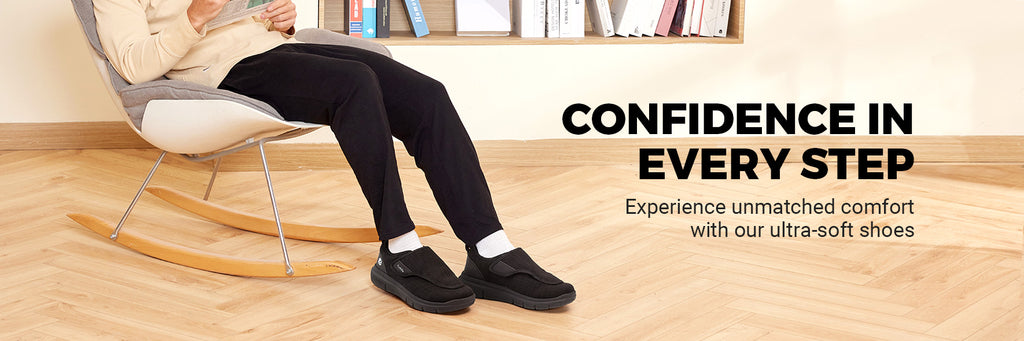
FAQs: What Shoes Are Best for Rheumatoid Arthritis?
Choosing the right shoes can be challenging when rheumatoid arthritis affects the feet. Swelling, stiffness, tenderness, sensitive toes, and changes in foot shape can make ordinary footwear feel uncomfortable. Shoes that are too narrow, too rigid, or poorly cushioned may create additional pressure during everyday activities.
So, what shoes are best shoes for rheumatoid arthritis?
In general, comfortable footwear should give the feet enough room while providing cushioning, stability, and a secure fit. Wide and extra-wide shoes, roomy toe boxes, adjustable closures, soft uppers, and supportive soles are all features worth considering.
This FAQ guide explains what to look for when choosing shoes for rheumatoid arthritis and how different footwear features can affect everyday comfort.
What Is Rheumatoid Arthritis?
Rheumatoid arthritis is an inflammatory condition that can affect joints throughout the body, including the feet. When the feet are affected, people may experience swelling, stiffness, tenderness, or discomfort when standing and walking.
Changes in foot shape can also affect how shoes fit. A shoe that once felt comfortable may become too narrow or create pressure in areas that are more sensitive.
Because everyone's feet and symptoms are different, there is no single type of shoe that works for everyone. The goal is to find footwear that accommodates your individual foot shape and provides comfortable support.
What Shoes Are Best for Rheumatoid Arthritis?
The best shoes for rheumatoid arthritis are generally those that combine room, cushioning, stability, and adjustability.
Useful features to look for include:
-
A wide or extra-wide fit
-
A spacious toe box
-
Comfortable cushioning
-
A stable sole
-
A soft, flexible upper
-
Adjustable closures
-
Enough length and toe clearance
-
A secure heel
-
Minimal pressure around sensitive areas
Rather than choosing shoes based solely on a label such as "arthritis shoes," pay attention to how the actual shoe fits and feels when you stand and walk.
Are Wide Shoes Good for Rheumatoid Arthritis?
Wide shoes can be helpful when rheumatoid arthritis causes swelling or changes in foot shape.
A narrow shoe can squeeze the forefoot and toes, especially when the feet become larger throughout the day. A wider shoe provides additional space across the foot and can help prevent the sensation of being compressed inside the shoe.
However, wider is not automatically better. The shoe should provide enough room without allowing the foot to slide excessively.
Look for a width that matches your foot rather than simply selecting the widest available option.
Are Extra-Wide Shoes Better for Rheumatoid Arthritis?
Extra-wide shoes can be particularly useful for people who need more room around the forefoot or midfoot.
Some people with rheumatoid arthritis find standard-width footwear restrictive, especially when swelling is present. Extra-wide options can provide additional space without requiring the foot to fit into a narrow shoe shape.
If your feet are particularly wide or swollen, consider footwear available in multiple width options, including 4E or 6E where appropriate.
The important point is to find a width that accommodates your feet comfortably while maintaining a secure fit.
Why Is a Wide Toe Box Important?
A wide toe box gives the toes more room to spread and move naturally.
This can be especially important when the toes or forefoot are sensitive. A tapered shoe can push the toes together and create pressure against the sides or top of the foot.
When looking for rheumatoid arthritis footwear, check that:
-
Your toes are not crowded together
-
The front of the shoe follows a comfortable foot shape
-
There is enough room above the toes
-
The upper does not press against sensitive areas
-
Your toes do not touch the front of the shoe while walking
Remember that overall shoe width and toe-box width are not necessarily the same thing.
Should Rheumatoid Arthritis Shoes Have Cushioning?
Cushioning can make shoes more comfortable for everyday walking and standing.
A cushioned sole can provide a softer underfoot feel and reduce the sensation of walking directly on hard surfaces. This may be particularly useful if your feet are sensitive.
However, extremely soft cushioning is not necessarily ideal for everyone. A shoe should still provide enough stability to keep the foot comfortably positioned.
Look for cushioning that feels comfortable without making the shoe unstable or difficult to walk in.
Is Arch Support Important for Rheumatoid Arthritis?
Arch support may be comfortable for some people, but it is not necessarily the most important feature for everyone with rheumatoid arthritis.
A well-designed shoe should provide a stable platform and comfortable underfoot support without creating excessive pressure underneath the arch.
If you use an insole with arch support, make sure it does not make the shoe too tight. This is particularly important when your feet need additional room because of swelling.
The best level of support depends on your individual foot shape and comfort preferences.
Are Adjustable Shoes Good for Rheumatoid Arthritis?
Adjustable shoes can be especially practical when foot size or swelling changes throughout the day.
Shoes with adjustable straps, Hook & Loop closures, or other adjustable fastening systems allow you to modify the fit instead of relying on a fixed opening.
This can be useful if:
-
Your feet swell during the day
-
One foot is larger than the other
-
You need additional room across the forefoot
-
You prefer different sock thicknesses
-
Traditional laces are difficult to adjust
The closure should keep the foot secure without creating excessive pressure across the top of the foot.
Are Soft Shoes Better for Rheumatoid Arthritis?
A soft upper can improve comfort around sensitive parts of the foot.
Flexible materials can move more naturally with the foot and may feel less restrictive than hard materials. This can be useful when the feet are sensitive or swollen.
However, a shoe should not be so soft that it loses all structure. Some level of support and stability may still be desirable for everyday walking.
A comfortable upper combined with a stable sole can provide a useful balance between softness and support.
Are Walking Shoes Good for Rheumatoid Arthritis?
Walking shoes can be a practical choice because they are designed for repeated movement and often include cushioning and supportive construction.
When choosing walking shoes, consider:
-
Width
-
Toe-box shape
-
Cushioning
-
Sole stability
-
Upper comfort
-
Heel security
-
Adjustability
A walking shoe should feel comfortable during actual movement, not just when you first put it on.
Walk around indoors when trying new shoes and check whether any areas begin to feel tight or uncomfortable.
Are Running Shoes Good for Rheumatoid Arthritis?
Some running shoes can work well for everyday wear if they provide enough width and a comfortable fit.
However, not every running shoe is suitable. Some styles have narrow, tapered toe boxes or highly structured uppers that may not accommodate sensitive or swollen feet.
If you prefer running-style footwear, focus on fit rather than the category itself. Look for a roomy toe box, adequate width, comfortable cushioning, and a stable sole.
What Shoes Should You Avoid With Rheumatoid Arthritis?
There is no universal list of footwear that everyone with rheumatoid arthritis needs to avoid. However, shoes that create noticeable pressure or discomfort may not be a good fit.
Be cautious with footwear that has:
-
Very narrow toe boxes
-
Tight uppers
-
Hard seams over sensitive areas
-
Insufficient width
-
Excessively high heels
-
Poor heel security
-
Very thin soles that feel uncomfortable
-
Rigid materials that restrict the foot
If a shoe causes pressure or rubbing during a short walk, it may be worth trying a different size, width, or style.
Are Orthopedic Shoes Good for Rheumatoid Arthritis?
Orthopedic-style footwear may be useful for people who need additional room, cushioning, stability, or adjustability.
However, the term "orthopedic" does not automatically mean a shoe will be comfortable for every person with rheumatoid arthritis.
Instead, examine the actual features. Useful characteristics may include:
-
Wide or extra-wide sizing
-
A roomy toe box
-
Comfortable cushioning
-
Stable construction
-
Adjustable closures
-
A removable insole
-
A comfortable upper
The shoe should ultimately fit your feet rather than forcing your feet to adapt to the shoe.
Can Insoles Make Rheumatoid Arthritis Shoes More Comfortable?
Insoles can change the way a shoe feels underfoot and may provide additional cushioning or support.
Some people prefer a supportive insole, while others find a softer insole more comfortable. The right option depends on individual preference and foot shape.
One important consideration is available space. If an insole is too thick, it can reduce the internal volume of the shoe and make the upper feel tighter.
If you use an insole, make sure your toes and forefoot still have enough room.
What Shoes Are Best for Rheumatoid Arthritis and Swollen Feet?
When swelling is a major concern, prioritize space and adjustability.
A shoe with an adjustable closure can be loosened when the foot becomes swollen and secured more firmly when the swelling decreases.
Useful features include:
-
Wide or extra-wide sizing
-
Adjustable straps
-
Hook & Loop fastening
-
A spacious toe box
-
A flexible upper
-
Adequate cushioning
-
A stable sole
It can also be useful to try shoes at the time of day when your feet tend to be largest.
What Shoes Are Best for Rheumatoid Arthritis in the Toes?
If rheumatoid arthritis affects the toes, focus on footwear that minimizes pressure around the front of the foot.
A rounded or anatomically shaped toe box can provide more space than a narrow, pointed design. Soft upper materials can also help reduce the sensation of pressure against sensitive areas.
Do not judge a shoe only by its length. A shoe can be long enough but still too narrow across the toes.
Check both the length and width when trying footwear.
What Shoes Are Best for Rheumatoid Arthritis for Everyday Use?
For everyday activities, look for a balance between comfort and stability.
A practical everyday shoe may include:
-
A wide toe box
-
The correct width
-
Comfortable cushioning
-
A stable sole
-
A secure heel
-
A soft upper
-
Adjustable fastening
If you spend long periods standing or walking, comfort should remain consistent rather than only feeling good for the first few minutes.
How Should Shoes Fit With Rheumatoid Arthritis?
Proper fit is one of the most important considerations.
When trying shoes, check that:
-
Your toes have enough room to move.
-
The widest part of your foot sits comfortably in the widest part of the shoe.
-
Your toes do not touch the front.
-
Your heel stays secure without excessive rubbing.
-
The upper does not create pressure points.
-
The shoe feels comfo


