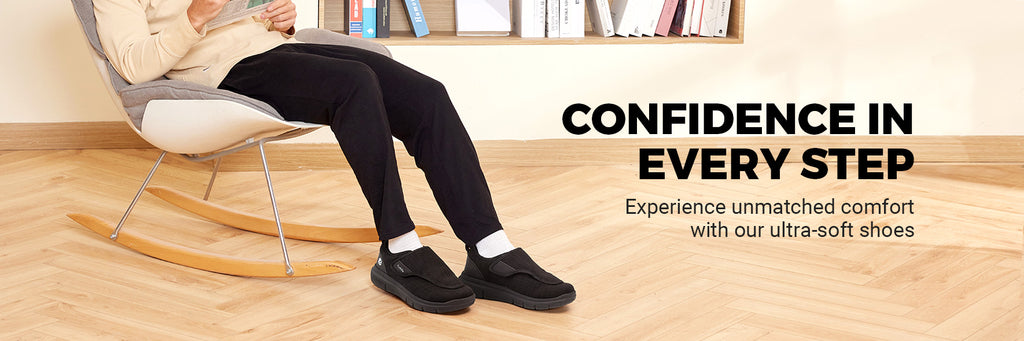
FAQs: What to Look for in Shoes for Swollen Feet

Finding comfortable shoes for swollen feet can be difficult, especially when your feet change size throughout the day. The right footwear should provide enough room without sacrificing stability and support.

Here are the most important features to look for when choosing shoes for swollen feet.

What Features Should Shoes for Swollen Feet Have?

Shoes for swollen feet should provide extra room, adjustability, cushioning, and a comfortable fit.

Important features include:

  • Wide or extra-wide fit
  • Roomy toe box
  • Extra interior depth
  • Adjustable closures
  • Flexible upper
  • Comfortable cushioning
  • Secure heel
  • Removable insole

The ideal combination depends on how much your feet swell and the type of activity you do.

Should I Choose Wide or Extra-Wide Shoes?

A wide or extra-wide shoe can provide additional room around the forefoot and sides of the foot.

If standard shoes feel tight, consider trying a wider width before simply buying a longer shoe. A longer shoe may leave too much space in front of the toes without solving the problem of insufficient width.

Width options can include Wide, 2E, 4E, 6E, or Extra Wide, depending on the manufacturer.

Is a Wide Toe Box Important for Swollen Feet?

Yes.

A wide toe box gives your toes more room to move and can reduce pressure around the front of the foot.

Look for a toe box that allows your toes to spread naturally without touching the sides or front of the shoe.

A rounded or anatomical toe box may be more comfortable than a narrow, pointed design.

Do Swollen Feet Need Extra-Depth Shoes?

They can.

Swelling doesn't always increase the width of the foot. It can also increase the volume around the top of the foot.

An extra-depth shoe provides more vertical space and may be especially useful for people with high-volume feet or those who wear orthotic inserts.

Look for shoes with a spacious interior and removable insoles when possible.

Are Adjustable Shoes Good for Swollen Feet?

Yes. Adjustability is one of the most useful features to look for.

Feet may become more swollen after several hours of standing or walking. Adjustable shoes allow you to loosen or tighten the fit as needed.

Useful closure options include:

  • Adjustable laces
  • Hook-and-loop straps
  • Multiple fastening points
  • Elastic panels
  • Wide openings

These features can make shoes easier to put on and more comfortable throughout the day.

Should Shoes for Swollen Feet Have Stretchable Uppers?

A flexible or stretchable upper can accommodate changes in foot volume.

Soft, flexible materials may reduce pressure on swollen areas compared with stiff materials.

However, the upper should not be so loose that your foot moves excessively inside the shoe.

The best option combines flexibility with enough structure to maintain a secure fit.

Is Cushioning Important for Swollen Feet?

Yes.

Comfortable cushioning can help reduce the impact of walking and standing, particularly if your feet are already uncomfortable.

Consider shoes with:

  • Cushioned heel
  • Supportive midsole
  • Comfortable forefoot cushioning
  • Shock absorption

Avoid choosing extremely soft shoes simply because they feel comfortable initially. A stable and well-cushioned platform can often provide better long-term comfort.

How Important Is Heel Support?

A secure heel is important even when you need extra room in the forefoot.

Your foot shouldn't slide excessively inside a wide shoe. Too much movement can cause friction, instability, and discomfort.

Look for a shoe that provides:

  • Secure heel counter
  • Adjustable fastening
  • Stable sole
  • Comfortable heel cushioning

Ideally, the shoe should be spacious in the areas affected by swelling while remaining secure around the heel.

Should Shoes for Swollen Feet Have Removable Insoles?

Removable insoles can be useful because they allow you to create additional interior space.

They can also make it easier to use orthotic inserts if needed.

If replacing the insole, make sure the new insert doesn't make the shoe too tight around the toes or top of the foot.

When Is the Best Time to Buy or Try on Shoes?

If your feet swell during the day, try shoes later in the day.

Your feet may be larger than they are in the morning, giving you a better indication of how the shoes will fit when swelling is present.

Wear your usual socks and walk around before making a decision.

How Should Shoes for Swollen Feet Fit?

The shoe should feel comfortable without being excessively loose.

Check that:

  1. Your toes have enough room to move.
  2. Your longest toe doesn't touch the front.
  3. Your forefoot isn't compressed.
  4. The upper doesn't press against swollen areas.
  5. Your heel remains secure.
  6. Your foot doesn't slide excessively.
  7. There are no obvious pressure points.

A comfortable shoe should provide room where you need it while maintaining overall stability.

Should You Buy a Larger Shoe Size for Swollen Feet?

Not necessarily.

If the main problem is width or foot volume, simply increasing the shoe length may create unnecessary space in front of your toes.

Instead, consider the correct length combined with a wider and/or deeper fit.

If both the length and width of your feet have changed, you may need to reassess your complete shoe size.

What Shoes Are Best for Different Activities?

The ideal shoe depends on how you plan to use it.

For walking, look for cushioning, stability, and a comfortable toe box.

For work, prioritize adjustability, cushioning, and all-day comfort.

For hiking, consider a roomy fit alongside traction, stability, and weather protection.

For casual wear, flexible materials and easy-to-adjust closures can make everyday use more comfortable.

What Should You Avoid in Shoes for Swollen Feet?

Try to avoid footwear with:

  • Narrow toe boxes
  • Pointed toes
  • Tight straps
  • Rigid uppers
  • Limited adjustability
  • Insufficient depth
  • Hard seams over the forefoot
  • Excessively tight heel areas

Shoes shouldn't create additional pressure simply because your feet become slightly larger throughout the day.

Can the Right Shoes Reduce Discomfort From Swollen Feet?

Proper footwear can improve comfort by reducing pressure and providing enough space for changes in foot volume.

However, shoes don't treat the underlying cause of swelling.

If swelling is persistent, sudden, severe, or unexplained, or if it occurs with pain, redness, warmth, or other concerning symptoms, seek appropriate medical advice.

Final Thoughts

When choosing shoes for swollen feet, focus on space, adjustability, comfort, and stability.

A good pair should ideally offer a wide toe box, appropriate width, extra depth, flexible materials, adjustable closures, comfortable cushioning, and secure heel support.

Most importantly, don't choose shoes based on size alone. Your feet should have enough room to accommodate swelling while remaining securely positioned inside the shoe.


×