


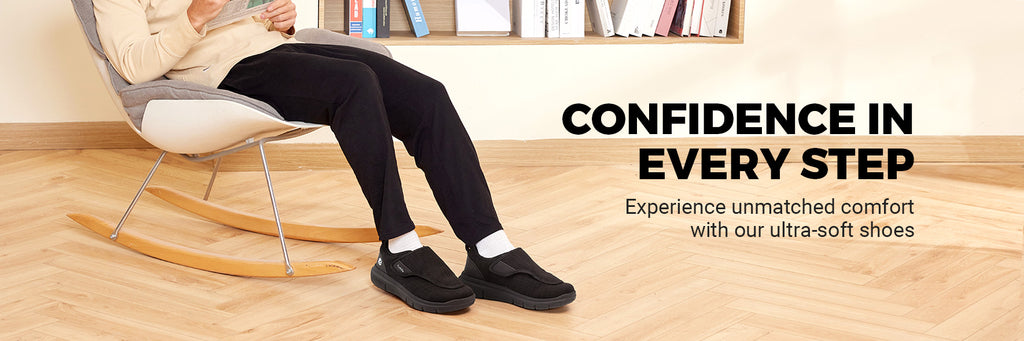
Where to Buy Wide Feet Shoes?
Buy wide feet shoes from brands that build width into the shoe last — not from ordinary brands' "W" sizes, which often mean a wider upper on a standard base. Specialist online retailers carry 2E to 6E, publish ball-girth measurements, and offer free returns so you can fit at home.
The market splits into three groups, each suited to a different need.
Where to Look
| Source | Best for | What to check |
|---|---|---|
| Width-specialist brands (FitVille, New Balance, Propét, Drew) | True multi-width lasts, 2E–6E | Actual millimetre width per size, not just letters |
| Comfort/orthopaedic brands (Clarks Wave, Ecco, Hoka wide) | Moderate widening, good cushioning | Whether width goes to the toe box or just the midfoot |
| High-street "wide fits" | Mild width needs, try-before-buy | Depth and toe box shape, which are often unchanged |
| Custom shoemakers | Extreme width, deformity, one foot wider than the other | Cost and fitting process; usually last resort |
What Separates a Real Wide Shoe
Letters on a box mean little without measurements. A genuinely wide shoe shows:
- Ball-girth data per size. The circumference across the ball, published in the size chart — this is the number that decides fit.
- Width across the whole last. The toe box, not just the waist, is widened.
- Multiple widths in the same length. 2E, 4E and 6E at the same size, so you change width without changing length.
- Depth. Wide feet often need depth too, for swollen midfoots or orthotics.
Buying Online Without Regret
- Measure both feet at the end of the day, standing, in the socks you will wear.
- Fit the larger foot. A half-width difference is normal.
- Order two sizes or two widths if returns are free. Fit is decided by the ball, not the length.
- Test indoors for a week. Wear them as you would in real use; check for red marks each evening.
- Check the return window against your test period. A 14-day window that starts at dispatch is shorter than it looks.
Getting the Width Right the First Time
Measure the ball girth with a soft tape around the widest part of the standing foot, then match it to the chart. If you are between widths, take the wider one and manage midfoot hold with laces — sliding in an over-wide shoe causes its own problems, but compression in an under-wide shoe is worse for arthritic or diabetic feet.
A Practical Starting Point
FitVille's men's wide shoes run from standard to 6E with published ball-girth data per size, built on the principle that width is engineered into the last. The same page carries the wide-fit guidance if your width problem comes with arthritis or diabetes.
FAQ
Are "wide" sizes from regular brands enough?
Sometimes, for mild needs. Regular-brand wides often widen the upper but not the last, so the toe box stays narrow. If your forefoot is genuinely wide, specialist multi-width lasts fit better.
Is it safe to buy shoes online without trying them?
With published measurements and free returns, yes — and home fitting is often more accurate than a shop, because you test at day's end in your own socks on your own floor.
How do I know my width letter?
You don't need to. Measure ball girth in millimetres and compare it with the size chart. Letters vary between brands; millimetres do not.
References
- Extended-width footwear for men. Men's Wide Shoes
- Arthritis footwear guidance. Men's Shoes for Arthritis
Related Questions
Further fit answers on this site:


