


How to Stop Shoes Rubbing the Back of Your Heel

Shoes can rub the back of the heel when the fit is too loose, too tight, or poorly structured. It's one of the most common complaints tied to new shoes, an imperfect size, or a heel counter that's simply too stiff — and left unaddressed, that friction can progress from a mild hot spot into blisters, redness, and pain within a single walk.
It's tempting to blame the shoe material or "just breaking it in," but the science points to something more specific. Research on foot friction blisters describes the underlying mechanism as repetitive shear deformation within the skin — layers of skin sliding against each other under load — rather than simple surface rubbing alone. [1,2] Three things drive this process: movement of the heel bone inside the shoe, friction at the skin-footwear interface, and repetition of that motion step after step. That's why a single tight spot rarely causes a blister on its own — it's the combination of pressure and repeated sliding that does the damage. Understanding that distinction changes how you should think about prevention: it's not just about padding things, it's about controlling movement.
Why Do Shoes Rub the Back of Your Heel?
Heel rubbing rarely comes down to a single cause. In most cases it's a combination of fit, construction, and habit working together:
- The shoe is too loose, letting the heel lift and slide inside the shoe with every step — this vertical "pistoning" motion is one of the most common triggers for shear-related blisters
- The shoe is too tight, so the heel takes on constant, concentrated pressure against a fixed surface — this is where a roomier, well-structured option such as FitVille is often worth considering, especially for wider or higher-volume feet
- The heel counter (the structured piece that wraps the back of the shoe) is made of a stiff, unyielding material that doesn't flex with your natural stride
- The shoes haven't been broken in yet — new leather, synthetic uppers, and foam linings often need time to mold to your foot's shape
- Socks are too thin, too thick, or made from a material that increases friction rather than gliding against the skin
- Increased activity or distance — a shoe that feels fine for a short errand can start causing hot spots after a few hours of continuous walking, simply because of how many repetitions the skin is exposed to
A recent review of blister research identifies poorly fitting footwear as a commonly cited risk factor, though the authors note that high-quality evidence directly confirming fit's role in blister prevention is still somewhat limited — much of the field still relies on athletic and military populations. [1] That's worth keeping in mind: fit is clearly important, but it's one variable among several, including skin moisture, temperature, and individual skin resilience.
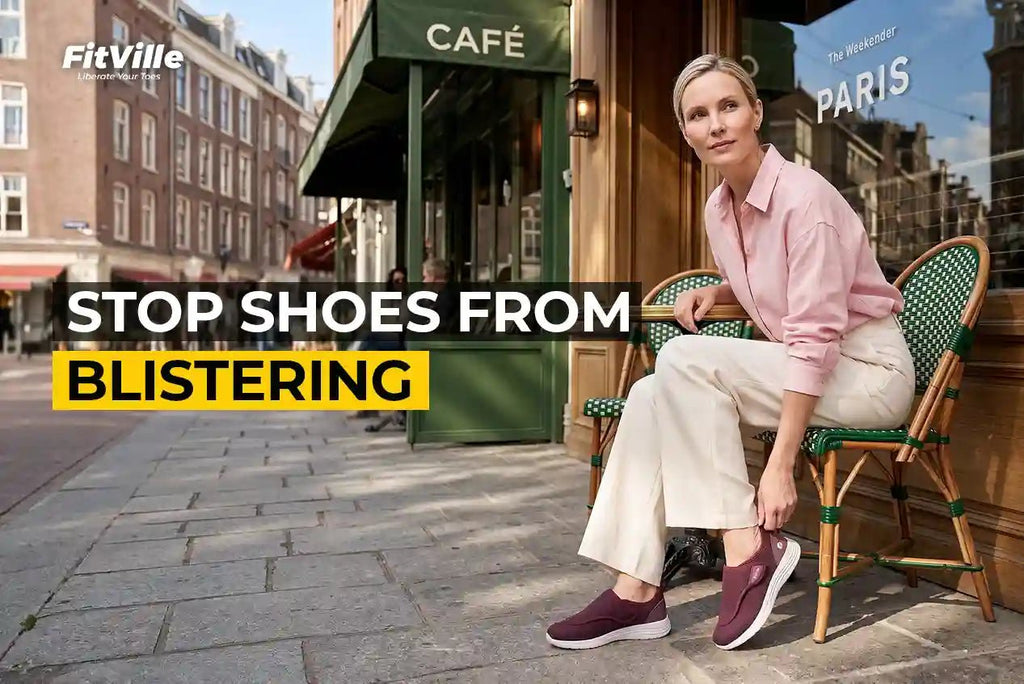
How to Prevent Shoes From Rubbing Your Heel
Choose the right size — and the right width. Choosing shoes with a secure heel fit can help reduce friction and prevent irritation. The heel should stay snug and stable while the toes still have a thumb's-width of room to move. If you're sizing up mainly to get more room across the forefoot, that's often a sign you need a wider width, not a longer shoe — added length just creates extra empty space around the heel for it to slide in.
Wear suitable socks. Moisture-wicking socks can help reduce friction between the heel and the shoe by keeping the skin drier and reducing drag at the contact point. Synthetic blends (like polyester or acrylic) and merino wool tend to wick better than 100% cotton, which holds moisture against the skin and can actually increase friction once it's damp. Some clinical reviews found evidence supporting densely padded acrylic socks specifically for blister-prone areas.
Break new shoes in gradually. Breaking in new shoes gradually can help reduce stiffness and friction around the heel. Start with an hour or two around the house, then short errands, before committing to a full day or a long walk. This gives both the shoe materials and your skin time to adapt, and lets you catch a problem spot early — while it's still just a red patch, not an open blister.
Use heel grips or protective patches. Heel grips or protective patches can cushion sensitive areas and minimize rubbing. They're most effective as a targeted fix when a shoe is only slightly loose in one specific spot — not as a permanent workaround for a shoe that's fundamentally the wrong size or shape for your foot.
Adjust the closure. Shoes with adjustable closures allow the fit to be tightened and help prevent excessive heel movement. For lace-up shoes, a heel-lock (runner's loop) lacing technique does the same job: thread the laces through the top eyelets on each side to form small loops, then cross the laces through the opposite loop before tying off. This locks the heel back into the shoe without needing to over-tighten the rest of the lacing.
Look for a soft, padded heel collar. Soft and padded heel collars can provide extra cushioning around the back of the foot, distributing pressure over a wider area instead of concentrating it on one point of bone and skin.
What If You've Already Developed a Blister?
- Stop wearing the shoe that's causing the friction until the area has fully recovered — continuing to walk in it will only deepen the shear damage
- Keep the affected area clean and dry to reduce infection risk
- Use an appropriate blister dressing — hydrocolloid patches are generally better than standard adhesive bandages, since they cushion the area and reduce further shear rather than just covering it
- Avoid repeatedly rubbing or re-irritating the damaged skin, even in a "healed-looking" area, until the new skin has toughened up
People with diabetes, reduced sensation, or circulation problems should be especially cautious about persistent skin irritation, since a minor blister can become a more serious wound without the usual pain signals warning you early. Seek professional medical advice if a blister looks infected, doesn't improve, or you have an underlying condition affecting foot health.
Shoe-Selection Tips
- Prioritize a stable, well-structured heel counter — press on the back of the shoe; it should resist collapsing under light pressure while still having a bit of give
- Avoid overly stiff or excessively high heel backs, which concentrate pressure right at the Achilles area
- Make sure the heel doesn't lift or slide more than a few millimeters as you walk a few steps in-store — genuine heel lock, not just a snug toe box
- For long periods on your feet, favor a soft heel collar, a cushioned midsole, and — if your feet run wide — a dedicated wide or extra-wide fit rather than sizing up in a standard width
Recommended: FitVille EasyTop Series
If your shoes repeatedly rub the back of your heel, the problem may not be your heel — it may be the way your footwear fits your entire foot. FitVille EasyTop Series are designed around a more accommodating foot shape, with wide and extra-wide options that can provide additional room across the forefoot without simply increasing shoe length.

Wide and Extra-Wide Fit: FitVille offers multiple width options, including extra-wide fittings, helping people with broader feet find additional room without sizing up unnecessarily.
Spacious Toe Box:A roomy toe box allows the toes to spread more naturally and provides additional space around the forefoot.
Secure and Supportive Heel: A supportive heel structure helps keep the foot positioned inside the shoe while providing comfortable support during walking.
Soft, Foot-Friendly Materials: Flexible upper materials can help minimise unnecessary pressure and irritation around sensitive areas.
Cushioned Midsole: Supportive cushioning helps absorb impact and reduce foot fatigue during extended periods of walking and standing.
Adjustable Fit: Selected FitVille styles feature adjustable closures, allowing you to fine-tune the fit and accommodate changes in foot volume throughout the day.
Before Buying Shoes: Choosing the right size
Choosing the right size, heel fit, materials, and cushioning can help prevent shoes from rubbing the back of your heel. Proper fit, reduced friction, and secure heel support add up to fewer heel blisters — and a more comfortable walk, whatever shoe you choose. If you keep running into the same fit problems across different shoes, it's usually worth reassessing width and heel structure specifically, rather than just adding more padding to compensate.
References
[1] Rushton R, Richie D. Friction Blisters of the Feet: A Critical Assessment of Current Prevention Strategies. Journal of Athletic Training. 2024;59(1):8–21. doi:10.4085/1062-6050-0341.22
[2] Rushton R, Richie D. Friction Blisters of the Feet: A New Paradigm to Explain Causation. Journal of Athletic Training. 2024. doi:10.4085/1062-6050-0309.22
[3] Davis AM, Galna B, Murphy AT, Williams CM, Haines TP. Effect of footwear on minimum foot clearance, heel slippage and spatiotemporal measures of gait in older women. Gait & Posture. 2016;44:43–47. doi:10.1016/j.gaitpost.2015.11.003
[4] Worthing RM, Percy RL, Joslin JD. Prevention of Friction Blisters in Outdoor Pursuits: A Systematic Review. Wilderness & Environmental Medicine. 2017;28(2):139–149. doi:10.1016/j.wem.2017.03.007
About FitVille Footwear
Just Follow us on LinkedIn, Facebook, YouTube, Instagram, RSS feed and Pinterest to catch our brand news.



What FitViller Prefers
Best Shoes to Buy

Popular Men's Shoes
Popular Women's Shoes
